Welcome to the official website of Chaoyang Liaoxi Heavy Machinery Manufacturing Co., Ltd!
 WhatsApp |



23
2024
-
03
Application, structure and working principle of air-box pulse bag filter
Author:
Application, structure and working principle of air-box pulse bag filter
1. uses
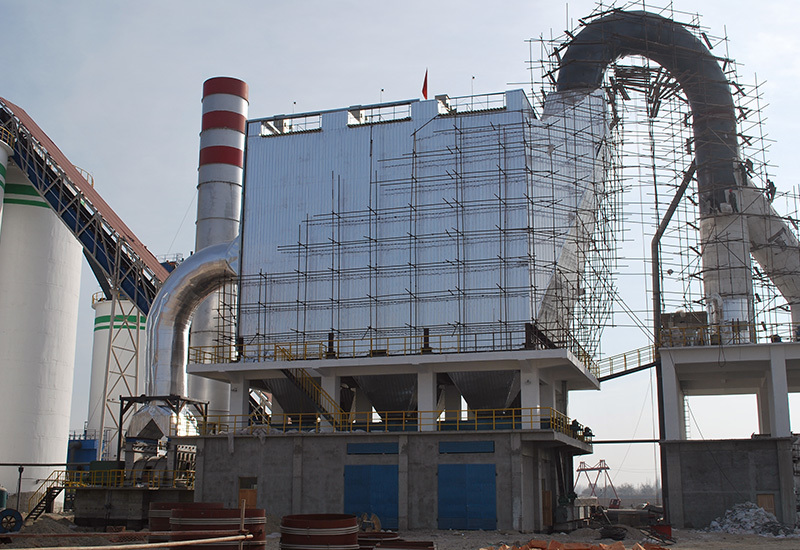
The air box pulse bag dust collector is a high-efficiency bag dust collector with the world's advanced level. This type of dust collector has the advantages of various types of dust collectors such as chamber blowback and injection pulse, and overcomes the shortcomings of insufficient kinetic energy intensity during chamber blowback and simultaneous injection, pulse, filtration and ash removal. Thus expanding its scope of application. Because of its cleaning principle and structural characteristics. Therefore, the dust removal efficiency is improved and the service life of the filter bag is prolonged.
The equipment is used for rotary kiln, vertical mill, powder separator, ball mill, dryer and many other equipment powder. The explosion-proof type can be directly used for dust removal of pulverized coal, and ensure that the outlet emission concentration is lower than various emission standards. The filter material adopts polyester needle felt, (explosion-proof anti-static filter material), temperature resistance120℃, there is no venturi tube or blowpipe at the upper opening of the filter bag, which reduces the working resistance and makes overhaul and maintenance quite simple. Electromagnetic pulse valve diameter, double diaphragm structure control sensitive, high efficiency, long life, is the key parts of the dust collector.
IIstructure and its working principle
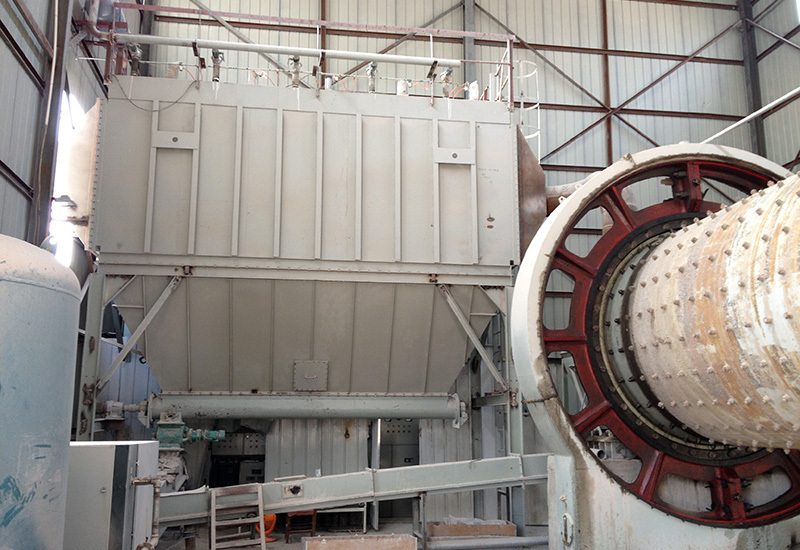
1.Structure
The air box pulse bag dust collector is composed of a box body, an ash hopper, a rigid impeller feeder, a column, a filter bag, a bag cage frame and a box body. Each chamber of the box body is equipped with a pulse valve and a poppet valve. The box body has an inlet and outlet air duct, and the air inlet duct is connected with the ash hopper.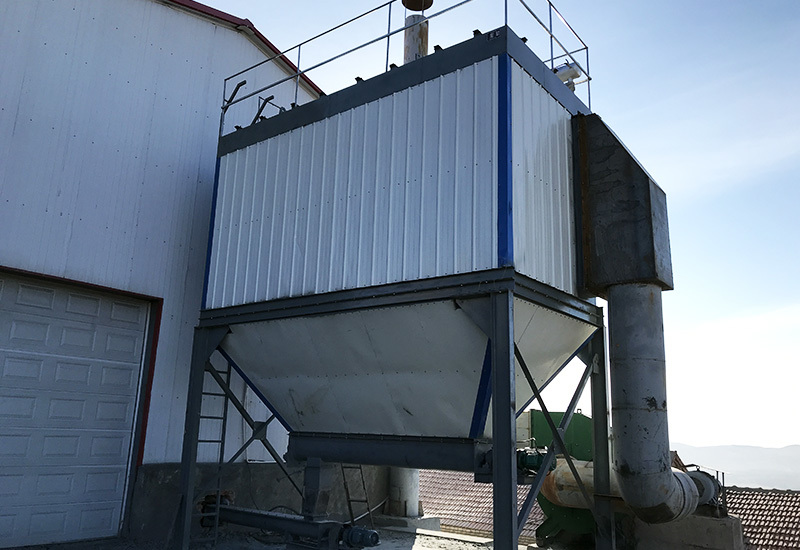
2.Working principle
When dust-containing gas enters the ash hopper from the air inlet, a part of condensed dust masses and coarse dust particles fall into the ash hopper due to inertial collision, natural settlement and other reasons. Most of the dust rises into the bag chamber with the air flow. After being filtered by the filter bag, the dust is retained outside the filter bag. After purification, the gas enters the box body from the inside of the filter bag, and then is discharged into the atmosphere through the valve plate hole and air outlet to achieve the purpose of dust removal, the dust accumulation outside the filter bag is also gradually increasing, and the resistance of the dust collector is also gradually increasing. When the set value is reached, the upper limit of the specified resistance or a certain time interval is reached, the dust cleaning program controller issues a dust cleaning instruction, first of all, the poppet valve plate is closed to cut off the gas path. Stop the chamber filtration, approx.2After seconds, the electromagnetic pulse valve opens in a very short time (0.1~0.15) seconds to inject high pressure into the box (0.5~0.7MPa) Gas and high-pressure gas expand rapidly in the upper box body and flow into the filter bag, causing the filter bag to deform due to inflation. Vibration and the blowing force of the air flow will remove the dust outside the filter bag and fall into the ash hopper at an appropriate time. After the ash removal is completed, the poppet valve will be opened again. As the equipment is divided into multiple chambers, the above process is carried out chamber by chamber without interference. When one chamber is ash removal, other rooms work as usual. One room is called a dust removal process from the beginning to the end of dust removal. Generally, it is3-10Seconds, from the end of the first chamber to the beginning of the second chamber, is called the chamber ash interval.
The time interval from the beginning of ash cleaning in the first chamber to the beginning of the next ash cleaning in this chamber is called the ash cleaning cycle. The length of the ash cleaning cycle depends entirely on the working conditions such as flue gas concentration and filter wind speed. Different ash cleaning cycles are recommended for different working conditions.
The completion of the cleaning action is automatically controlled by the cleaning program controller. There are two types of controllers: timing and fixed resistance. The timing type is to preset a cleaning cycle time according to the change of resistance of the dust collector, and the dust collector shall clean the dust according to a fixed preset time. This controller does not need a differential pressure switch, is convenient to debug and maintain, and is suitable for occasions with relatively stable working conditions. The constant resistance type, that is, the differential pressure type, is to set a differential pressure switch in the controller, and measure the running resistance of the dust collector through the pressure measuring hole set on the dust collector. When the dust removal resistance is reached, the differential pressure switch sends out a signal to start the controller to carry out centralized dust removal, thus realizing the best match between the dust removal period and the running resistance, and is more suitable for occasions with frequent changes in working conditions. One thing to note is that when the working conditions are stable, the timing and constant resistance tend to be consistent.
Dust Collector,Bag dust collector,Single bag dust collector,Air box pulse bag dust collector
Previous Page
Contact Information
Address: No.22, Section 3, Huanghe Road, Shuangta District, Chaoyang City, Liaoning Province
Telephone:+86 13904217870
WhatsApp:+86 13904217870
Fax: +86-421-3398828
Mailbox:wgl@cylxzx.com
Zip Code: 122000